

Balancing streetwear accessories feels impossible when every piece you love competes for attention. You end up with cluttered looks that confuse rather than impress, and confidence takes a hit. This guide reveals three proven rules that slash visual overload by 40%, helping you layer accessories with intention for bold, cohesive style that amplifies your urban identity in 2026.
Table of Contents
- Prerequisites: What You Need Before Styling Streetwear Accessories
- Step 1: Curate and Select Accessories Aligned with Your Streetwear Aesthetic
- Step 2: Layer Accessories with Intention Using Proven Styling Rules
- Step 3: Express Individuality and Fluidity in Accessory Styling
- Step 4: Troubleshooting Common Mistakes in Streetwear Accessory Styling
- Step 5: Expected Outcomes: How to Know Your Styling Works
- Explore Premium Streetwear Accessories at BlackWisp.Studio
- Frequently Asked Questions
Key Takeaways
| Point | Details |
|---|---|
| Limit accessories to 3 pieces | Avoid visual clutter and maintain style clarity with this simple cap. |
| Apply the 3-2-1 layering rule | Balance your look with 3 accessories across 2 body zones, featuring 1 hero piece. |
| Maintain dominant metal tones | Mix silver and gold by keeping one tone primary to ensure cohesive styling. |
| Embrace gender-fluid trends | Express individuality with unisex pieces like pearl necklaces and layered textures. |
| Use social feedback as validation | Positive reactions and personal confidence signal successful accessory styling. |
Prerequisites: What You Need Before Styling Streetwear Accessories
Successful accessory styling starts with quality investment and trend awareness. You need the right tools and mindset to build a foundation that supports your creative expression without wasting money on pieces that don’t last.
Essential tools and knowledge for effective streetwear accessory styling:
- Invest in premium, durable accessories for longevity and style payoff that withstand daily wear and elevate your wardrobe over time.
- Research current 2026 streetwear trends to align your accessory choices with urban culture movements, ensuring your look stays relevant and fresh.
- Gather practical tools like handheld mirrors for checking angles, strong lighting to assess color tones accurately, and outfit cataloging apps or journals to plan cohesive looks ahead of time.
- Familiarize yourself with your existing wardrobe’s color palette and silhouettes so new accessories integrate seamlessly rather than clash.
- Set a realistic budget that prioritizes quality over quantity, focusing on versatile pieces that work across multiple outfits.
Building a streetwear wardrobe starts with understanding which accessories align with your personal aesthetic and lifestyle needs. Quality pieces offer better longevity and maintain their visual impact through repeated wear, making them worth the initial investment. Taking time to prepare now saves frustration later when you’re trying to curate balanced, confident looks.
Step 1: Curate and Select Accessories Aligned with Your Streetwear Aesthetic
Choosing the right accessories requires understanding your style identity and matching it with 2026 urban trends. You want pieces that resonate with your personality while staying current with streetwear culture evolution.
Key considerations for selecting streetwear accessories:
- Identify key accessory categories such as jewelry, headwear, and bags matching your look to narrow your focus and avoid impulse purchases that don’t fit your wardrobe.
- Consider sustainable and tech-infused accessory options for modern relevance, incorporating recycled polyester, organic cotton, or smart features that align with eco-conscious urban values.
- Match metal tones and materials with your existing wardrobe’s color scheme, ensuring accessories complement rather than compete with your base pieces.
- Explore tech-enhanced options like LED backpacks or smart jewelry that add cutting-edge appeal to your streetwear presence.
- Focus on versatile pieces that work across casual and elevated streetwear contexts, maximizing wear frequency and value.
Understanding 2026 streetwear trends helps you make informed choices that feel both personal and culturally relevant. Sustainability matters more than ever, with recycled materials and ethical production influencing purchasing decisions among fashion-conscious youth. Tech integration offers functional benefits while signaling forward-thinking style sensibility.
When exploring streetwear accessory categories, prioritize items that reflect your daily activities and social settings. A statement chain might dominate your outfit at a concert, while a minimalist cap suits everyday commutes. Selecting sustainable streetwear accessories demonstrates awareness of environmental impact without sacrificing style, appealing to peers who value conscious consumption.
Step 2: Layer Accessories with Intention Using Proven Styling Rules
Layering accessories effectively demands technical knowledge and restraint. The difference between polished and cluttered lies in following proven principles that balance visual weight across your body.
Pro Tip: Use one bold accessory as your hero piece to anchor the look and draw attention intentionally, making everything else support rather than compete.
Apply the structured approach below to master layering:
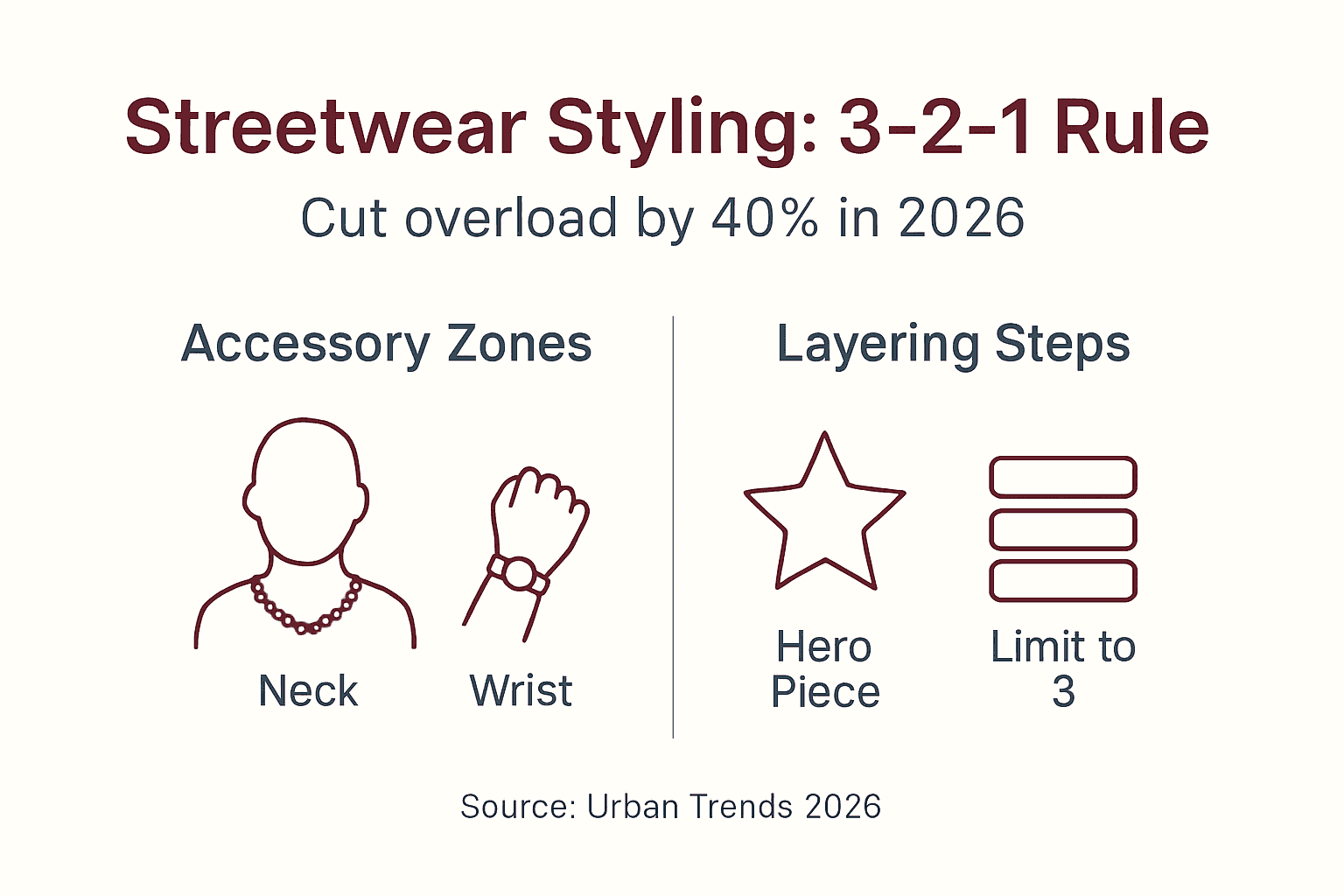
- Start with the 3-2-1 rule: max 3 accessories, 2 active body zones, and 1 hero piece to avoid overload, which prevents visual confusion while maintaining style impact.
- Select chains 50-55 cm long and 2-4 mm thick to complement hoodies or tees without overwhelming your neckline or getting lost in fabric folds.
- Mix silver and gold metals by maintaining a dominant tone to keep cohesive style, ensuring one metal comprises at least 70% of visible pieces.
- Activate two body zones maximum, such as neck and wrists, leaving other areas clean to maintain visual breathing room.
- Let your hero piece shine by keeping supporting accessories subtle in size, texture, or color.
| Accessory Type | Recommended Size | Ideal Placement | Visual Weight |
|---|---|---|---|
| Statement Chain | 50-55 cm, 2-4 mm thick | Neck (layered) | High |
| Rings | 2-3 max per hand | Fingers (varied) | Medium |
| Wrist Accessories | Slim to medium width | Single wrist | Medium |
| Headwear | Fitted or adjustable | Head (primary zone) | High |
| Bags | Crossbody or backpack | Torso/shoulder | High |
The 3-2-1 layering rule transforms chaotic styling into intentional design, helping you avoid accessory overload that dilutes your fashion statement. Chain length and thickness matter because they determine how pieces interact with necklines and layering garments. Too thin gets lost, too thick overwhelms.
Metal mixing works when you respect dominance hierarchy. If silver comprises three of four visible metal accessories, that single gold piece adds contrast without creating conflict. This principle applies whether you’re wearing rings, chains, or watch bands.
Step 3: Express Individuality and Fluidity in Accessory Styling
Modern streetwear celebrates breaking traditional boundaries through gender-fluid expression and maximalist layering. You gain confidence and authenticity when accessories reflect your true identity rather than conforming to outdated style rules.
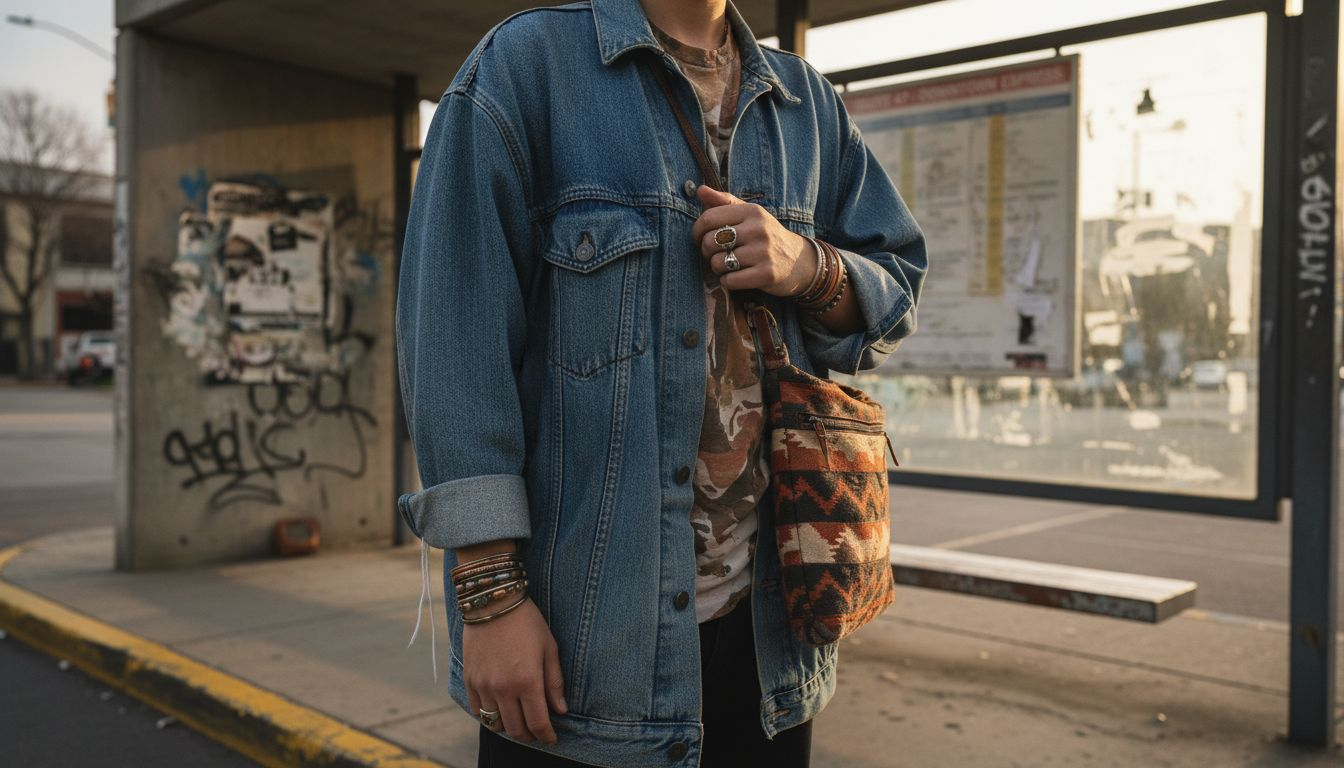
Pro Tip: Don’t fear breaking traditional rules; fluidity in styling conveys modern streetwear confidence and signals cultural awareness.
Ways to embrace individuality in accessory styling:
- Integrate gender-fluid accessories like pearl necklaces and unisex layering pieces that challenge conventional fashion norms and express personal identity beyond traditional categories.
- Adopt maximalist layering techniques such as mixing textures, combining leather with metal, or wearing unexpected items like skirts over pants to create visual interest.
- Use accessories as bold fashion statements that communicate your values, interests, or cultural affiliations within urban communities.
- Experiment with unconventional placements, like wearing multiple caps stacked or chains crossing your torso diagonally, to push creative boundaries.
- Draw inspiration from global street style movements that prioritize self-expression over conformity, adapting trends to fit your unique perspective.
The rise of gender-fluid streetwear trends reflects broader cultural shifts toward inclusivity and personal freedom in fashion. Gender-fluid accessory styling isn’t about following rules but creating your own visual language that resonates with your identity. Pearl necklaces, traditionally coded feminine, now appear across all gender expressions in streetwear contexts, signaling openness and confidence.
Maximalist approaches work when anchored by the structural rules from Step 2. You can layer boldly while maintaining the 3-2-1 framework by ensuring your hero piece dominates and supporting elements stay intentional. This balance lets you express complexity without sacrificing coherence, showing mastery rather than confusion.
Step 4: Troubleshooting Common Mistakes in Streetwear Accessory Styling
Even experienced stylists fall into predictable traps that undermine their looks. Recognizing and fixing these errors quickly elevates your overall presentation and saves you from style regret.
Common accessory styling mistakes and their solutions:
- Accessory overload reduces perceived fashionability by 40%, so limit yourself to three pieces maximum to maintain visual clarity and impact.
- Maintain a dominant metal tone when mixing silver and gold, ensuring one comprises at least 70% of visible metals to avoid style conflict and maintain cohesion.
- Ensure one accessory stands out as the clear hero piece for outfit cohesion, preventing focal confusion where everything competes for attention equally.
- Simplify your accessory zones by removing extras from busy areas, keeping two body zones active maximum to create breathing room.
- Avoid matching accessories too precisely in color or texture, which creates monotony rather than intentional styling.
Wearing too many accessories creates visual noise that distracts from your overall aesthetic rather than enhancing it. When you fix accessory overload by removing even one piece, the remaining items gain prominence and your look becomes instantly more sophisticated. This principle applies whether you’re styling jewelry, bags, or headwear.
Metal mismatch happens when you split metals 50/50 across accessories, creating visual tension without resolution. Choose silver or gold as your primary tone, then add small accents of the other if desired. This hierarchy guides the eye and prevents confusion about your style intention.
Many common streetwear styling mistakes stem from overthinking rather than trusting simple principles. When you feel uncertain about a look, remove one accessory and reassess. Usually, less reveals more about your style sensibility than adding complexity for its own sake.
Step 5: Expected Outcomes: How to Know Your Styling Works
Successful accessory styling produces measurable results in both visual balance and social response. You’ll recognize effective styling through objective markers and subjective confidence shifts.
Indicators that your accessory styling achieves its goals:
- Balanced accessory count and clear focal points create visual harmony that photographs well and translates across different lighting and settings.
- Positive social feedback and confidence gains mark styling success with balanced accessories, manifesting as compliments from peers and strangers who notice your intentional aesthetic.
- Increased personal confidence and expression validate effective styling, showing as improved posture, willingness to engage socially, and comfort in your appearance.
- Your outfits feel effortless rather than forced, with accessories enhancing rather than defining your look.
- You receive specific compliments about individual pieces or overall cohesion, not vague positive remarks.
Visual balance becomes immediately apparent in photos and mirrors when you nail accessory styling. Your eye travels naturally across the outfit without snagging on visual conflicts or overwhelming elements. This flow indicates that your 3-2-1 rule application and metal tone choices work harmoniously.
Social validation matters because fashion exists in cultural context. When peers recognize and appreciate your styling choices through styling confidence and social feedback, you confirm that your personal expression resonates beyond individual preference. This external reinforcement fuels continued experimentation and refinement.
Personal confidence represents the ultimate success metric. When you stop questioning your accessory choices and start enjoying your appearance, you’ve internalized effective styling principles. This confidence shows in how you carry yourself, interact with others, and approach new style challenges with curiosity rather than anxiety.
Use social feedback as a benchmark but trust your own judgment as the final authority. Streetwear styling success indicators include both external validation and internal satisfaction, creating a feedback loop that drives continuous style evolution.
Explore Premium Streetwear Accessories at BlackWisp.Studio
Ready to translate styling knowledge into confident looks? BlackWisp.Studio offers curated collections that align with the principles you’ve learned throughout this guide.
Discover premium streetwear accessories crafted for durability and bold expression, from chains to statement pieces that anchor your layered looks. Explore premium streetwear headwear that complements your accessory game while maintaining visual balance. Combine these curated products with insights from our building a streetwear wardrobe guide to create a complete, cohesive style portfolio that reflects your urban identity and confidence in 2026.
Frequently Asked Questions
How many accessories should I wear at once for balanced streetwear styling?
Limit yourself to three visible accessories maximum, distributed across two body zones with one hero piece dominating. This prevents visual overload while maintaining style impact.
Can I mix silver and gold accessories without looking confused?
Yes, maintain one metal as your dominant tone comprising at least 70% of visible pieces. This creates intentional contrast rather than accidental conflict in your styling.
What chain length works best with hoodies and streetwear tops?
Choose chains between 50-55 cm long and 2-4 mm thick to complement hoodies without getting lost in fabric or overwhelming your neckline. This range sits perfectly on most streetwear silhouettes.
How do I know if my accessory styling reflects current 2026 trends?
Stay updated on 2026 streetwear accessory trends through fashion platforms and urban culture sources. Look for sustainability features, tech integration, and gender-fluid designs that define modern streetwear.
How should I maintain premium streetwear accessories for longevity?
Store metal accessories separately to prevent scratching, clean regularly with appropriate materials, and rotate pieces to distribute wear evenly. Quality maintenance preserves both appearance and investment value over time.