

Every city street tells its own story through bold graphics, oversized hoodies, and sneakers with serious attitude. For young style pioneers, streetwear is more than a look—it is a way to claim identity in a fast-changing world shaped by New York, Tokyo, Paris, and beyond. Mixing retro vibes with modern twists, this culture bridges unique local energy and global influence, helping you showcase personality while respecting the deep roots and powerful cultural background behind every trend.
Table of Contents
- Streetwear Defined: Evolution and Misconceptions
- Major Styles and Regional Variations Worldwide
- Key Characteristics: Materials, Silhouettes, and Graphics
- Rise of Techwear, Sustainability, and Digital Fashion
- Influencers, Brands, and Market Impact
- Risks, Pricing, Resale, and Common Mistakes
Key Takeaways
| Point | Details |
|---|---|
| Cultural Roots | Streetwear originated as a form of identity and resistance within urban communities, challenging societal norms through fashion. |
| Global Variations | Each region reflects its unique cultural influences in streetwear, demonstrating a blend of local authenticity with global trends. |
| Tech and Sustainability | The future of streetwear involves a focus on tech innovations and sustainable practices, merging functionality with aesthetic expression. |
| Market Dynamics | Understanding the market requires awareness of risks like counterfeits and pricing volatility, emphasizing the importance of community and cultural appreciation. |
Streetwear Defined: Evolution and Misconceptions
Streetwear is far more than just clothing - it’s a cultural movement rooted deeply in urban communities and subcultural expression. Emerging from skateboarding, surfing, and hip-hop scenes, streetwear represents a powerful form of identity and resistance through fashion.
The origins of streetwear trace back to the 1970s and 1980s, where it began as a rebellious form of casual wear strongly connected to youth culture. Key characteristics that define streetwear include:
- Comfort and functionality as primary design principles
- Bold graphic designs reflecting cultural narratives
- Loose, adaptable silhouettes that prioritize personal expression
- Deep connections to music, art, and underground movements
Understanding streetwear requires recognizing its complex cultural landscape. Urban communities have used clothing as a form of storytelling and resistance, transforming simple garments into powerful statements about identity, belonging, and social dynamics.
Many contemporary misconceptions about streetwear stem from its mainstream commercialization. What began as a grassroots movement has now become a global fashion phenomenon, sometimes losing touch with its original subcultural roots. Brands and consumers alike must remain conscious of streetwear’s authentic origins to prevent cultural appropriation.
Pro Tip: To truly appreciate streetwear, research its historical context and support brands that honor its original cultural significance.
Major Styles and Regional Variations Worldwide
Global streetwear transcends mere fashion, representing a complex tapestry of cultural expression shaped by regional identities and generational perspectives. Streetwear trends demonstrate significant regional variations, with each geographical region contributing unique aesthetic interpretations.
Regional streetwear styles reflect distinctive cultural nuances across different continents:
- Asian Markets: Blend traditional motifs with contemporary design
- European Scene: Emphasize minimalist, architectural silhouettes
- North American Style: Focus on bold graphics and oversized fits
- South American Streetwear: Incorporate vibrant color palettes and indigenous design elements
Generation Z’s digital exposure significantly influences global streetwear trends, creating a unique intersection between local cultural heritage and global interconnectedness. The result is a dynamic fashion ecosystem where individual expression meets collective identity.
What makes contemporary streetwear fascinating is its ability to simultaneously represent local authenticity and global connectivity. Each regional variation tells a story - from Tokyo’s intricate layering techniques to New York’s bold urban aesthetics, streetwear serves as a visual language communicating complex social narratives.
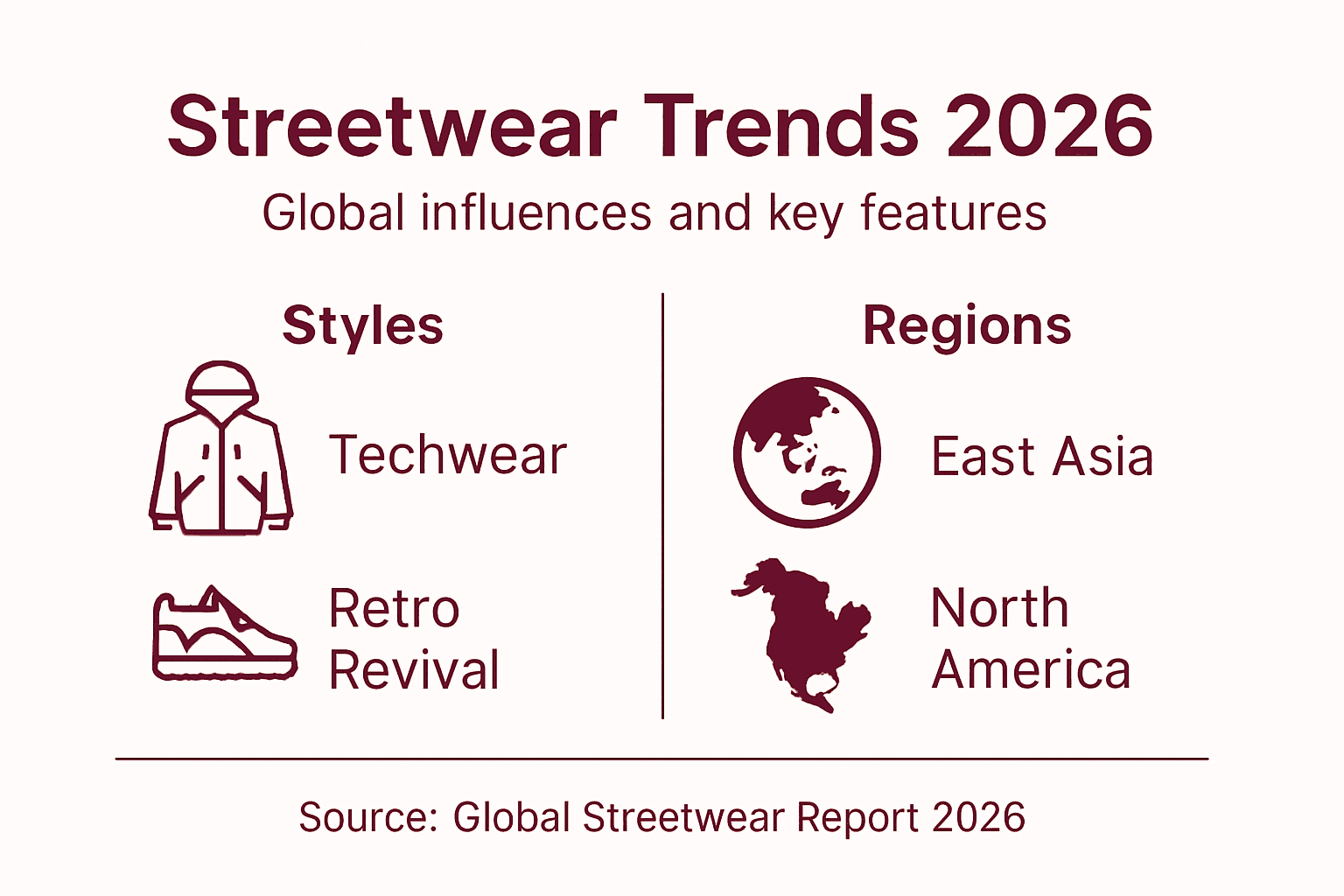
Pro Tip: Explore streetwear styles from different regions to understand the rich cultural diversity embedded in contemporary fashion.
Here’s a quick look at how regional streetwear styles reflect local influences:
| Region | Distinctive Aesthetic Features | Cultural Influences |
|---|---|---|
| Asia | Layered, motif-rich, technical | Traditional arts, avant-garde |
| Europe | Minimalist, structured fits | Architecture, youth music |
| North America | Bold graphics, oversized shapes | Hip-hop, skateboarding |
| South America | Vivid colors, local patterns | Indigenous designs, festivals |
Key Characteristics: Materials, Silhouettes, and Graphics
Streetwear in 2026 represents a sophisticated fusion of comfort, functionality, and artistic expression. Streetwear trends are defined by innovative material choices that prioritize sustainability, versatility, and individual style.
The key material and design characteristics include:
- Sustainable Fabrics: Eco-friendly textiles like recycled polyester and organic cotton
- Techwear Influences: Tactical utility features with functional design elements
- Nostalgic Aesthetics: 90s and Y2K-inspired graphic treatments
- Comfort-Driven Silhouettes: Oversized and relaxed fits that prioritize movement
Fabric selections for 2026 emphasize lightweight and refined materials, with a focus on elevated textures like brushed fleece and French terry. These materials offer a perfect balance between comfort and sophisticated style, allowing wearers to express their individual aesthetic while maintaining functional versatility.

Graphic elements continue to play a crucial role in streetwear, serving as visual narratives of personal identity. From minimalist designs to bold artistic statements, these graphics transform clothing from mere fabric into a medium of self-expression, reflecting the wearer’s cultural background, artistic preferences, and social perspectives.
Pro Tip: Invest in versatile pieces with unique graphic treatments that can be layered and styled multiple ways.
Rise of Techwear, Sustainability, and Digital Fashion
Streetwear in 2026 is transforming beyond traditional boundaries, emerging as a powerful intersection of technology, sustainability, and digital expression. Digital fashion in the metaverse represents a groundbreaking approach to reimagining fashion’s environmental and cultural impact.
Key characteristics of this emerging landscape include:
- Smart Textiles: Advanced fabrics with integrated technological features
- Virtual Garment Ecosystems: Digital clothing experiences in immersive platforms
- Modular Design: Adaptable clothing with multi-functional capabilities
- Sustainable Production: Reduced ecological footprint through innovative manufacturing
Techwear aesthetic continues evolving with cyberpunk-inspired designs, emphasizing gender-neutral silhouettes and tactical utility. These innovations reflect a generation’s desire for clothing that transcends traditional aesthetic boundaries, combining practical functionality with progressive cultural expression.
The convergence of digital platforms and physical fashion creates unprecedented opportunities for personal storytelling. Young consumers are no longer passive recipients of fashion trends but active participants in creating and reimagining sartorial identities across physical and virtual spaces.
Pro Tip: Invest in versatile techwear pieces that can transition seamlessly between physical and digital fashion experiences.
Key differences between modern techwear and classic streetwear:
| Aspect | Classic Streetwear | Modern Techwear |
|---|---|---|
| Main Focus | Self-expression, comfort | Functionality, innovation |
| Materials | Cotton, fleece, denim | Technical fabrics, smart tech |
| Design Motifs | Artistic graphics | Modular, tactical aesthetics |
| Marketplace | Physical stores, resale | Hybrid digital-physical sales |
Influencers, Brands, and Market Impact
Streetwear’s global marketplace continues to evolve dynamically, driven by innovative brand strategies and powerful digital narratives. The streetwear market is projected to reach substantial growth, with key markets like Asia Pacific leading transformative trends.
Critical market dynamics include:
- Celebrity Collaborations: Leveraging star power for brand authenticity
- Micro-Influencer Networks: Niche communities driving targeted engagement
- Performance-Driven Partnerships: AI-enhanced influencer marketing strategies
- Global Brand Ecosystems: Transcending traditional marketing boundaries
Influencer marketing strategies are becoming increasingly sophisticated, moving beyond surface-level metrics toward measurable sales impact and genuine community building. Brands now prioritize authentic relationships and data-driven collaboration over mere visibility.
The intersection of social media, digital platforms, and streetwear culture has created a revolutionary marketing landscape. Young consumers increasingly view influencers not just as promotional tools, but as cultural curators who shape collective identity and brand perception.
Pro Tip: Focus on building genuine relationships with micro-influencers who authentically represent your brand’s core values.
Risks, Pricing, Resale, and Common Mistakes
Streetwear’s complex marketplace demands strategic navigation, with significant challenges emerging across pricing, authenticity, and market dynamics. The streetwear resale market confronts multiple intricate risks, requiring sophisticated consumer and seller awareness.
Key risks and strategic considerations include:
- Counterfeit Products: Rising prevalence of fake merchandise
- Pricing Volatility: Rapid fluctuations in market valuation
- Supply Scarcity: Limited edition drops creating demand uncertainty
- Authentication Challenges: Verifying product legitimacy
The direct-to-consumer model has transformed streetwear economics, creating both opportunities and potential pitfalls. Successful participants must develop nuanced understanding of market trends, community expectations, and value preservation strategies.
Navigating the streetwear ecosystem requires more than financial investment - it demands cultural intelligence. Collectors and enthusiasts must balance trend awareness with genuine appreciation, understanding that true value extends beyond monetary worth into cultural significance and personal expression.
Pro Tip: Always verify product authenticity and track market trends before making significant streetwear investments.
Elevate Your Urban Style with BlackWisp.Studio
Understanding the ever-evolving landscape of global streetwear trends in 2026 means embracing innovation, authenticity, and bold self-expression. If you want to stand out in a world where streetwear merges technology, sustainability, and cultural identity, you need apparel that reflects these dynamic shifts. BlackWisp.Studio offers a curated selection of premium streetwear designed for fashion-conscious individuals who value quality craftsmanship and distinctive designs rooted in street culture.
Explore the freshest looks in our New Arrivals - Latest Streetwear Drops | BlackWisp.Studio collection to stay ahead of trends influenced by techwear, sustainable materials, and digital fashion. Whether you seek expressive headwear or essential lifestyle pieces, our Premium Streetwear | BlackWisp.Studio line combines functionality with striking aesthetics to match your urban identity.

Discover your unique style at BlackWisp.Studio now and transform your wardrobe with trend-driven, authentic streetwear. Don’t wait to make your statement. Shop today and lead the culture rather than follow it.
Frequently Asked Questions
What is the essence of streetwear in 2026?
Streetwear in 2026 represents a blend of comfort, functionality, and artistic expression. It emphasizes sustainable fabrics, innovative designs, and the integration of technology in fashion.
How do techwear and classic streetwear differ?
Classic streetwear primarily focuses on self-expression and comfort, often using materials like cotton and fleece, whereas modern techwear emphasizes functionality and innovation with technical fabrics and modular designs.
What role do graphics play in contemporary streetwear?
Graphics are a crucial element in streetwear, serving as visual narratives of personal identity. They transform clothing into a medium for self-expression, reflecting cultural backgrounds and artistic preferences.
What are common risks associated with streetwear purchases?
Common risks include counterfeit products, pricing volatility due to market fluctuations, supply scarcity from limited releases, and challenges with product authentication.
Recommended
- Origin of Streetwear Culture: Roots, Impact, Evolution – BlackWisp.Studio
- Why Streetwear Is Global: Origins, Impact, Influence – BlackWisp.Studio
- Trendsetting Streetwear Guide for Fashion Leaders – BlackWisp.Studio
- Streetwear vs High Fashion: Why It Matters Now – BlackWisp.Studio
- urban fashion styles and identity – ELEDOasis