

Streetwear isn’t just another fashion trend destined to fade. It’s a powerful cultural movement rooted in diverse youth subcultures, spanning decades of identity, rebellion, and self-expression. This guide explores the origins, evolution, and modern relevance of the streetwear community, revealing why it matters more than ever in 2026. You’ll discover how streetwear became a global phenomenon and how today’s community values sustainability, quality, and authentic personal style.
Table of Contents
- Origins And Evolution Of The Streetwear Community
- Streetwear As A Cultural Community And Identity Movement
- Modern Streetwear Trends And Community Values In 2026
- Streetwear’s Impact On Global Fashion And Culture
- Explore Premium Streetwear Styles And Accessories
- What Is Streetwear Community? Frequently Asked Questions
Key takeaways
| Point | Details |
|---|---|
| Cultural roots | Streetwear emerged from hip-hop, skate, surf, graffiti, and nightlife cultures spanning the 1960s through 1990s. |
| Identity expression | The community values streetwear as self-expression and rebellion, not just clothing trends. |
| 2026 trends | Oversized silhouettes, premium materials, and sustainability define current streetwear styles. |
| Global influence | Streetwear shaped a $185 billion global market and transformed luxury fashion forever. |
| Community connection | Shared cultural codes, aesthetics, and values unite diverse members worldwide. |
Origins and evolution of the streetwear community
The streetwear community didn’t emerge overnight. Streetwear’s roots trace back to the 1960s and 70s, evolving from graffiti art, hip-hop, skate, surf, and sports influences. By the 1990s, streetwear originated from hip-hop scenes in New York, surf-skate and graffiti culture in Los Angeles, and nightlife in Japan.
These diverse origins created something remarkable. Each subculture contributed unique aesthetics and values. Hip-hop brought bold graphics and brand consciousness. Skate culture added DIY ethics and functional design. Surf communities emphasized laid-back comfort. Graffiti artists injected visual rebellion and artistic expression.
Street culture originates from marginalized urban communities, particularly among African American, Latino, and working-class youth. These communities used clothing as powerful identity markers. When mainstream fashion ignored them, they created their own rules. They transformed everyday garments into statements of pride, resistance, and belonging.
Shawn Stussy pioneered exclusivity marketing in the 1980s, creating limited drops that built hype and community loyalty. His approach revolutionized how streetwear brands connected with audiences. This model of scarcity and authenticity became foundational to streetwear commerce.
Key influences that shaped early streetwear:
- Hip-hop fashion brought oversized silhouettes and logo-centric designs
- Skateboarding introduced durable materials and functional streetwear staples
- Graffiti culture added bold graphics and artistic rebellion
- Surf communities contributed relaxed fits and beach-inspired aesthetics
- Japanese street fashion merged these elements with meticulous craftsmanship
This convergence of diverse youth movements created something unprecedented. Streetwear became more than fashion. It became a language, a tribe, and a vehicle for cultural expression. The origin of streetwear culture reveals how marginalized voices built a movement that would eventually reshape global fashion.
“Streetwear represents the democratization of fashion, where the streets dictate trends rather than traditional fashion houses.”
The evolution continued through the 1990s and 2000s as brands like Supreme, BAPE, and Stussy solidified streetwear’s cultural legitimacy. Each era added layers of meaning, complexity, and innovation. What began as underground youth expression grew into a sophisticated cultural ecosystem with its own rules, rituals, and values.
Streetwear as a cultural community and identity movement
Understanding streetwear’s origins helps clarify its deeper meaning today. Streetwear is a cultural phenomenon, not just a trend, serving as an expression of youth and counterculture. This distinction matters because it explains why streetwear endures while fashion trends come and go.
Streetwear was not created by brands but by communities carving out identity and rebellion. Young people rejected mainstream fashion’s gatekeeping. They defined their own aesthetics based on authenticity, creativity, and cultural relevance. This grassroots foundation remains streetwear’s core strength.
The community embraces diversity in powerful ways. Members express individual identity through clothing choices while participating in shared cultural codes. You might wear vintage band tees, limited-edition sneakers, or graphic hoodies. Each choice signals something about your values, influences, and tribal affiliations.
Streetwise youth built this movement from the ground up. They transformed thrift store finds into coveted pieces. They made brands like Champion and Carhartt cool decades before luxury houses noticed. They created the blueprint for modern influencer culture through organic community building and authentic storytelling.
Streetwear has evolved, branching off into sub-styles like athleisure, luxury, techwear, and grunge. This diversification reflects the community’s expansive nature. No single aesthetic defines streetwear anymore. Instead, multiple tribes coexist, overlap, and influence each other.
Key aspects of streetwear identity:
- Self-expression through clothing choices that reflect personal values and influences
- Rebellion against mainstream fashion rules and traditional gatekeeping
- Community belonging through shared aesthetics and cultural references
- Authenticity valued over conformity or trend-chasing
- Cultural literacy demonstrated through knowledge of brands, history, and subcultures
The relationship between streetwear and urban identity runs deep. Urban environments provide the backdrop for streetwear’s evolution. City streets become runways where real people showcase real style. This organic fashion ecosystem operates outside traditional fashion industry structures.
“The streets don’t lie. What works in real life, not on runways, defines authentic streetwear.”
Streetwar fosters genuine connection in ways traditional fashion cannot. When you recognize someone wearing a rare collaboration or underground brand, instant recognition occurs. You share unspoken understanding of cultural references, aesthetic values, and community belonging. This tribal recognition creates powerful social bonds.
The community’s grassroots nature means it constantly evolves. New voices, perspectives, and innovations emerge regularly. Gatekeeping exists, but passionate newcomers who demonstrate genuine appreciation and cultural literacy find acceptance. Authenticity matters more than money or status.
Modern streetwear trends and community values in 2026
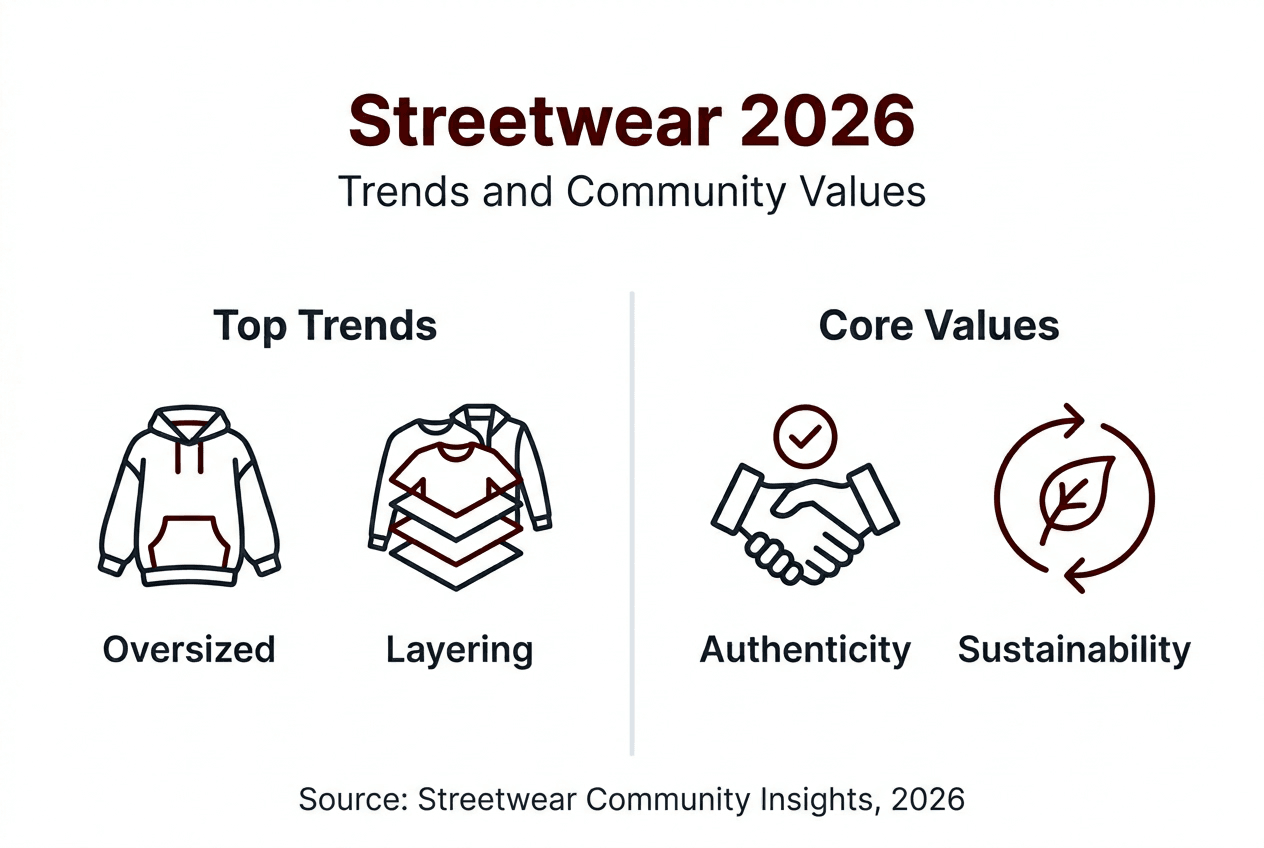
Moving from community meaning to current expression, 2026 reveals fascinating trends. Oversized silhouettes dominate urban streetwear trends in 2026, emphasizing comfort and laid-back style. Baggy jeans, voluminous hoodies, and oversized tees define the contemporary aesthetic.
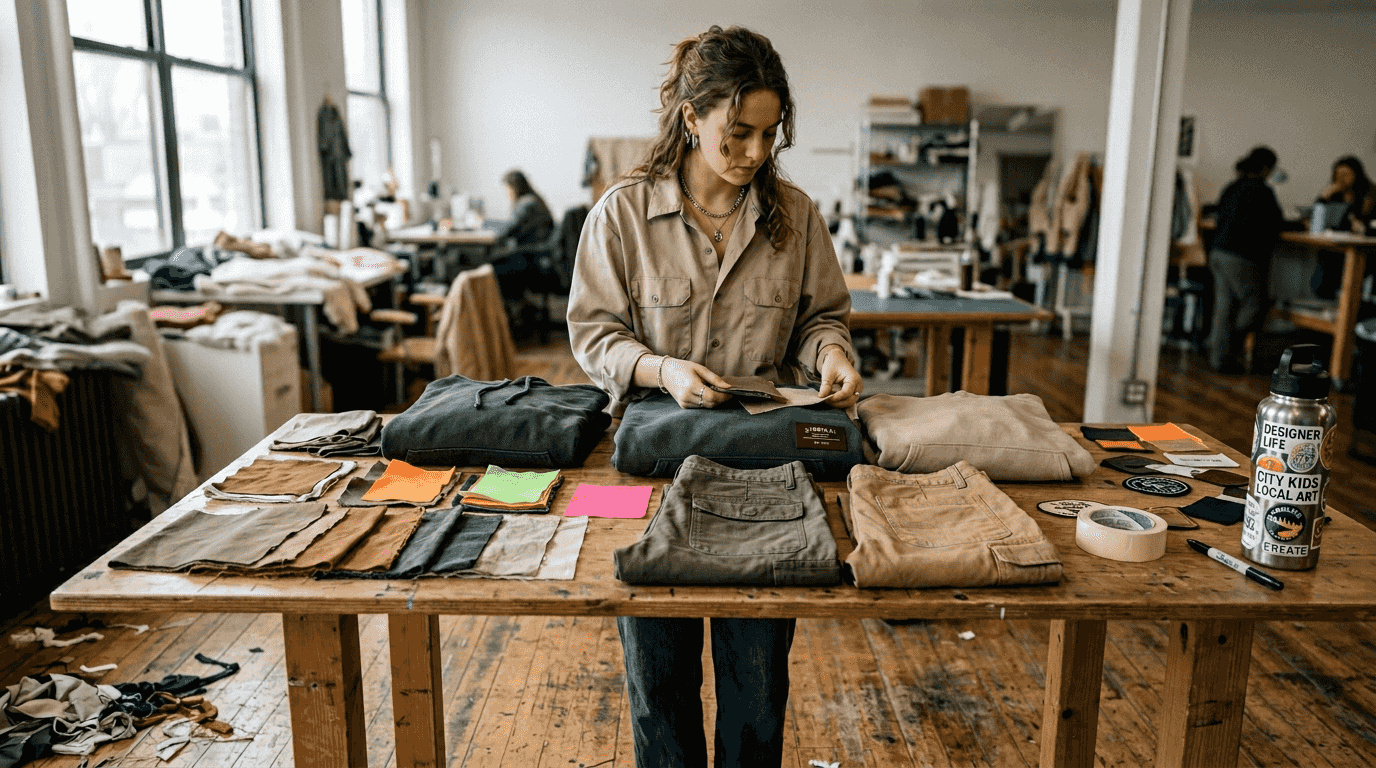
This shift reflects deeper values. Post-pandemic, youth consumers focus on sustainability, quality, and personal style. Fast fashion’s appeal faded as people prioritized thoughtful consumption. The community now demands pieces that last, feel good, and align with environmental values.
Layering and contrast in proportions became essential styling techniques. You might pair an oversized hoodie with fitted pants, or wear baggy jeans with a cropped jacket. These combinations create visual interest while maintaining the relaxed vibe streetwear champions.
Premium materials like heavyweight cotton and structured fleece elevate oversized pieces beyond sloppy to sophisticated. Quality fabrics ensure garments maintain shape, provide comfort, and withstand regular wear. This focus on craftsmanship distinguishes modern streetwear from cheap imitations.
| Trend Element | 2026 Characteristics | Community Value |
|---|---|---|
| Silhouette | Oversized, baggy, voluminous | Comfort and personal expression |
| Materials | Premium heavyweight cotton, structured fleece | Quality and longevity |
| Sustainability | Ethical production, durable construction | Environmental responsibility |
| Styling | Layering, proportion contrast, mix-and-match | Creative individuality |
Color palettes in 2026 blend neutral foundations with bold accent pieces. Earth tones, blacks, and grays provide versatile bases. Vibrant colors and graphics add personality without overwhelming outfits. This balance allows personal expression while maintaining wearability.
Graphic design evolved beyond logo-centric approaches. Artistic collaborations, cultural references, and storytelling through visuals became more sophisticated. Graphics now communicate narratives, values, and affiliations with nuance and depth.
Key styling approaches for 2026:
- Layer oversized hoodies over fitted base layers for dimension
- Combine baggy bottoms with more structured tops for balance
- Use accessories like caps and bags to complete the streetwear aesthetic
- Mix premium basics with statement pieces for versatile wardrobes
- Prioritize comfort without sacrificing style or quality
The focus on sustainable streetwear reflects maturity in the community. You want pieces that align with values, not just aesthetics. Brands that prioritize ethical production, quality materials, and transparent practices earn loyalty. This shift demonstrates streetwear’s evolution from pure rebellion to thoughtful cultural expression.
Pro Tip: Invest in versatile, high-quality basics first. Premium oversized hoodies and well-made tees form the foundation of any streetwear wardrobe. Build your collection gradually, prioritizing pieces that reflect your personal style and values.
Exploring 2026 streetwear trends reveals how global influences shape local expressions. Different cities and regions interpret core streetwear principles through unique cultural lenses. This diversity enriches the community while maintaining shared values of authenticity, quality, and self-expression.
Streetwear’s impact on global fashion and culture
Expanding beyond community trends, streetwear’s global influence reshaped fashion entirely. The 2000s marked luxury brands recognizing streetwear’s influence, blending haute couture and street fashion. High fashion houses realized they couldn’t ignore the cultural force streetwear represented.
The 2010s saw landmark collaborations like Supreme x Louis Vuitton consolidating streetwear’s high fashion status. These partnerships legitimized streetwear in fashion’s highest circles. What was once underground became runway-worthy.
Designers like Virgil Abloh transformed the relationship between streetwear and luxury. His work at Off-White and Louis Vuitton proved streetwear aesthetics could command premium prices and critical acclaim. Balenciaga, Gucci, and other luxury houses followed, incorporating streetwear elements into collections.
Streetwear’s global market was estimated at $185 billion in 2019, showing significant economic impact. This massive market size demonstrates streetwear’s transformation from subculture to mainstream economic force. Brands, investors, and traditional fashion houses all compete for streetwear market share.
| Fashion Approach | Traditional Luxury | Modern Streetwear |
|---|---|---|
| Design philosophy | Exclusivity through price | Exclusivity through culture |
| Marketing | Top-down, editorial | Bottom-up, community |
| Pricing strategy | Consistent premium | Drop-based scarcity |
| Consumer relationship | Aspirational distance | Authentic connection |
| Innovation source | Designer vision | Street culture feedback |
The community’s diversity expanded globally. Tokyo’s Harajuku district, London’s East End, Seoul’s Gangnam, and New York’s SoHo all became streetwear epicenters. Each location contributed unique perspectives while participating in global conversations about style, culture, and identity.
This globalization created interesting dynamics. Local streetwear scenes maintained distinct characteristics while influencing each other through social media and cultural exchange. You could spot Japanese precision, American boldness, European minimalism, and Korean innovation all coexisting and cross-pollinating.
Collaborations became standard practice rather than rare events. Streetwear brands partnered with artists, musicians, athletes, and even traditional luxury houses regularly. These partnerships generated hype, expanded audiences, and pushed creative boundaries.
The relationship between streetwear and high fashion evolved from opposition to integration. High fashion borrowed streetwear’s authenticity and cultural relevance. Streetwear gained access to luxury production techniques and distribution channels. Both benefited from the exchange.
Pro Tip: Understanding streetwear’s evolution helps you navigate the current landscape. Recognize that quality, authenticity, and cultural literacy matter more than price tags or brand names. Build knowledge of streetwear history to make informed choices about which brands and pieces align with your values.
Streetwar’s cultural impact extends beyond fashion. It influenced music, art, media, and consumer behavior broadly. The community’s emphasis on authenticity, limited releases, and cultural storytelling became marketing blueprints across industries. Streetwear didn’t just change fashion. It changed how brands connect with audiences.
Explore premium streetwear styles and accessories
Now that you understand the streetwear community’s depth, explore pieces that embody these values. BlackWisp.Studio offers premium streetwear aligning with 2026’s emphasis on quality, sustainability, and authentic style. Our curated collections reflect the community’s evolution from underground expression to sophisticated cultural movement.
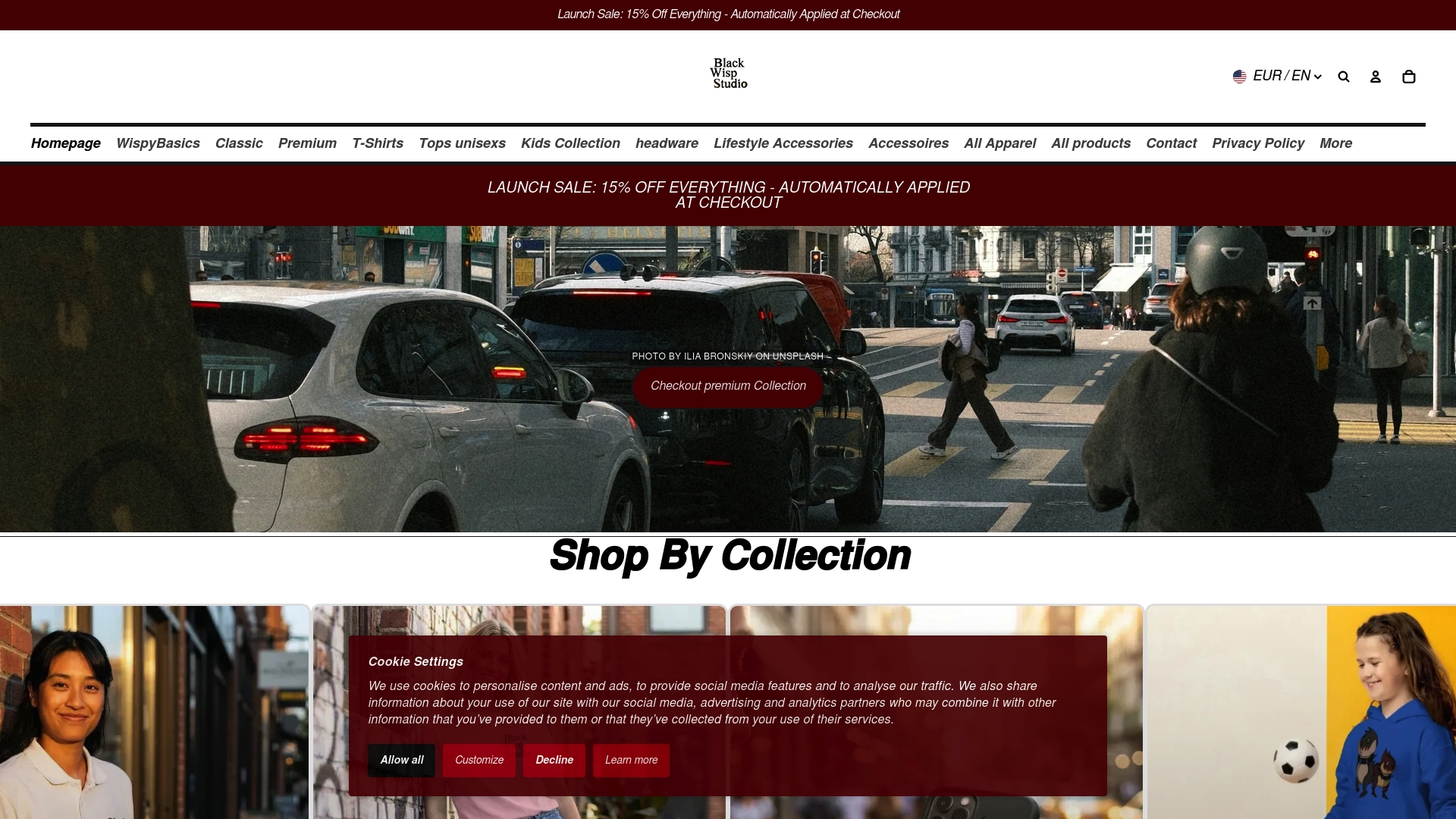
Discover oversized hoodies crafted from heavyweight materials that maintain shape and comfort through countless wears. Our premium zip hoodies combine the relaxed silhouettes dominating 2026 trends with construction quality that justifies investment. Each piece balances contemporary aesthetics with timeless streetwear fundamentals.
Explore premium streetwear t-shirts that serve as versatile wardrobe foundations. Quality basics allow you to build layered looks while expressing personal style through graphics and fits. Complete your aesthetic with lifestyle accessories that add finishing touches to any streetwear outfit. Every item reflects the community’s values of quality craftsmanship, thoughtful design, and authentic cultural expression.
What is streetwear community? Frequently asked questions
What defines the streetwear community in 2026?
The streetwear community in 2026 centers on shared values of authenticity, quality, and self-expression rather than just clothing styles. Members prioritize sustainable production, premium materials, and pieces that reflect personal identity while connecting to broader cultural movements. The community spans globally but maintains grassroots authenticity through respect for streetwear’s origins in youth subcultures.
How did streetwear evolve from subculture to mainstream?
Streetwar evolved through organic community building starting in the 1960s-90s, gaining mainstream recognition in the 2000s when luxury brands acknowledged its cultural influence. Landmark collaborations like Supreme x Louis Vuitton in the 2010s cemented streetwear’s legitimacy in high fashion. This evolution maintained authenticity by keeping community values central even as commercial success grew.
Why do oversized silhouettes dominate 2026 streetwear?
Oversized fits reflect post-pandemic shifts toward comfort, personal space, and relaxed aesthetics. Premium materials ensure oversized pieces maintain structure rather than appearing sloppy. This trend also allows creative layering and proportion play, giving wearers more styling flexibility. Comfort and self-expression merge in ways that feel authentic to contemporary streetwear values.
What makes streetwear different from regular fashion?
Streetwar emerges from communities rather than designers, prioritizing cultural authenticity over trend cycles. The focus stays on identity expression, rebellion, and grassroots innovation instead of top-down dictation. Streetwear values include cultural literacy, quality over quantity, and maintaining connections to origins in hip-hop, skate, and urban subcultures. It’s a lifestyle and identity system, not just clothing choices.
How can someone join the streetwear community authentically?
Join by learning streetwear history, understanding cultural references, and investing in quality pieces that reflect personal values. Engage genuinely with the culture through social media, local scenes, and respectful appreciation of diverse influences. Prioritize authenticity over hype, choose pieces that resonate personally, and support brands aligned with community values of sustainability and craftsmanship.